Yoruba: dájú, to be sure, to be certain
The mark
The two high-tone marks that turn d-a-j-u into dájú, certain, impressed in stamp ink inside a double-ring seal. The tone is the certainty; the seal is the register that earns it.
Why the tone marks
Written without tones, daju is four letters. With two high tones it is dájú: certain. Everyone else types the word without them. The identity keeps them, in ink, because they are the difference between a word and its meaning, the way a seal is the difference between a photocopy and a certified true copy.
Palette
paper
#f7f6f2 · #141416
Ground: the photocopy, or the carbon copy
toner
#121212 · #edebe6
Text and rules
stamp
#5e35a1 · #b49be8
One action per screen and the seal itself
mark
#fff06a · #c9b93a
Highlighter, only on evidence
red ink
#b3261e · #f28b82
The Stop stamp, nothing else
Type
Stamps and labels
Archivo 800, width 75
Headings and body
Archivo, width 92
Evidence and quotes
Courier Prime
Directions considered
Tone sealships
The two high-tone marks that make dájú mean certain, impressed inside a double-ring seal. The tone is the certainty; the seal is the register that earns it.
Page and seal
A photocopied page with the seal over its corner: only a record on file earns the impression.
Accents as ink
The word itself is the mark: toner letters, and only the two accents printed in stamp ink.
Ledger tick
A ruled register line with one entry sitting on it: on file means a line in the book.
Downloads
The pack for posts, headers and the submission form. Rendered from the same mark and type as the site.

Mark, SVG
daju-mark.svg

Mark, violet on transparent
daju-mark-1024.png

Mark, cream on transparent
daju-mark-white-1024.png

App icon
daju-icon-512.png

Wordmark for light surfaces
daju-wordmark-light.png

Wordmark for dark surfaces
daju-wordmark-dark.png

Cover, 1500 by 500
daju-cover-1500x500.png
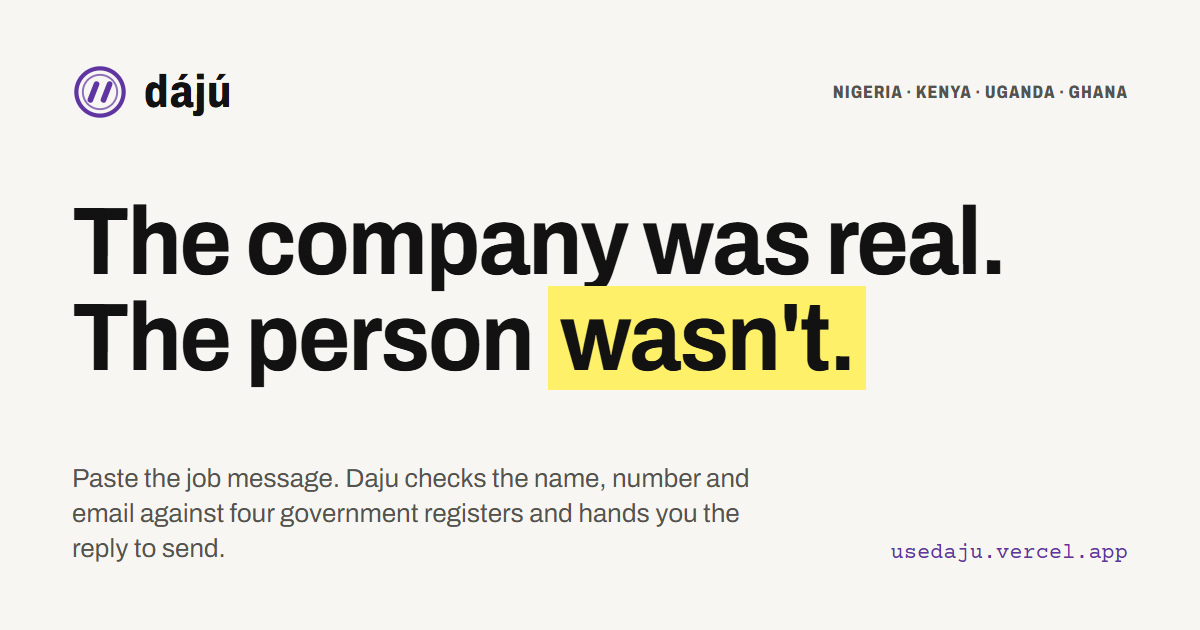
Social card, 1200 by 630
daju-social-1200x630.png
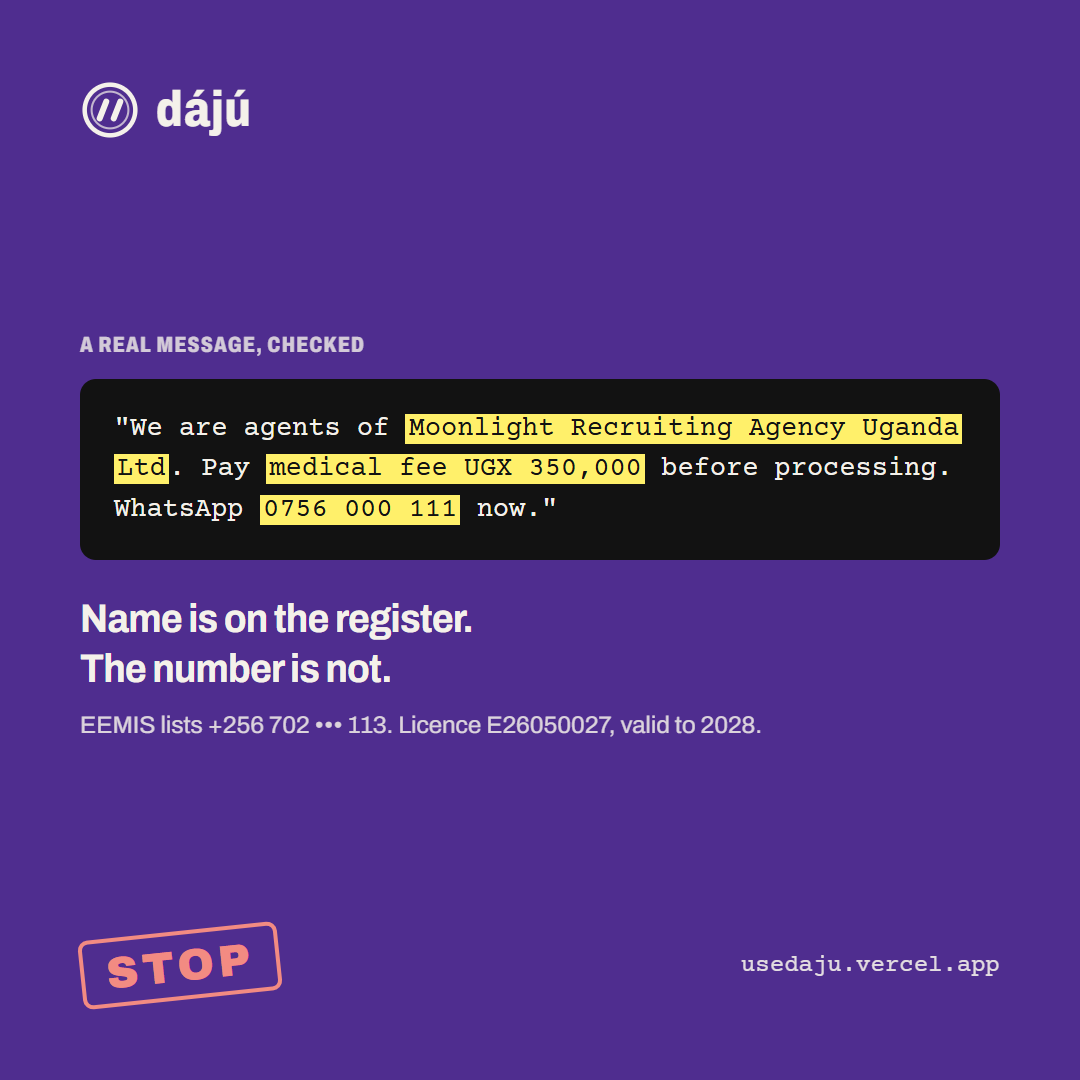
Square post
daju-post-1080x1080.png
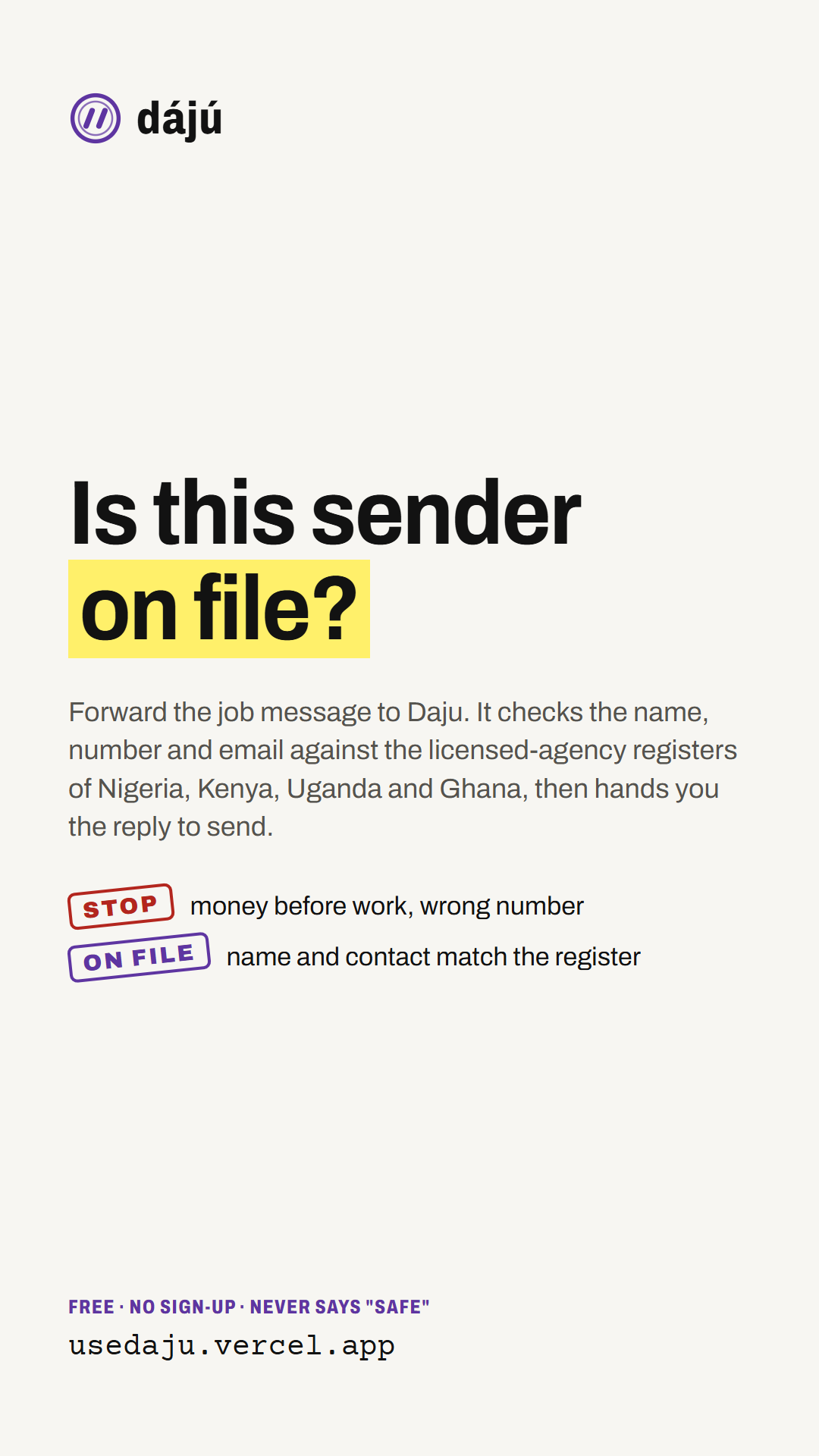
Story
daju-story-1080x1920.png